Lessons from Coke, Santa, and one creative director’s humble opinion
I’ve worked in creative production long enough to have seen the onslaught of many a “next-big-thing”—DSLR cinematography, drone footage, fully virtual production, and now, of course, AI. I’ve directed and produced campaigns that used 100% traditional tools, and others built around AI-driven workflows. These days, the question isn’t whether you can use AI, it’s whether you should.
Right now, AI is awfully seductive to clients and agency leaders alike: faster output, lower costs, infinite creative variations. It’s a “get on the bus or get left behind” kind of game-changing technology that has significantly supercharged many parts of our workflow. But as AI becomes ubiquitous, it ceases to impress. Audiences have already gotten wise. They’re asking: Does this feel real? Does this feel human? Does this feel like something someone cared to craft?
Brands need to tread carefully.
Take Coke’s new holiday ad, for instance. Coke introduced the jolly Santa in the red suit we all love so much back in 1931, and they've owned the holiday ever since. No doubt to keep hold of that association in the minds of their audiences, all they had to do was play good defense and run some warm fuzzy spots around the holidays. This year, their spot is 100% AI-generated (and, as an aside, still took 100 people and a month to make).
The comments section is gold if you want a good chuckle.
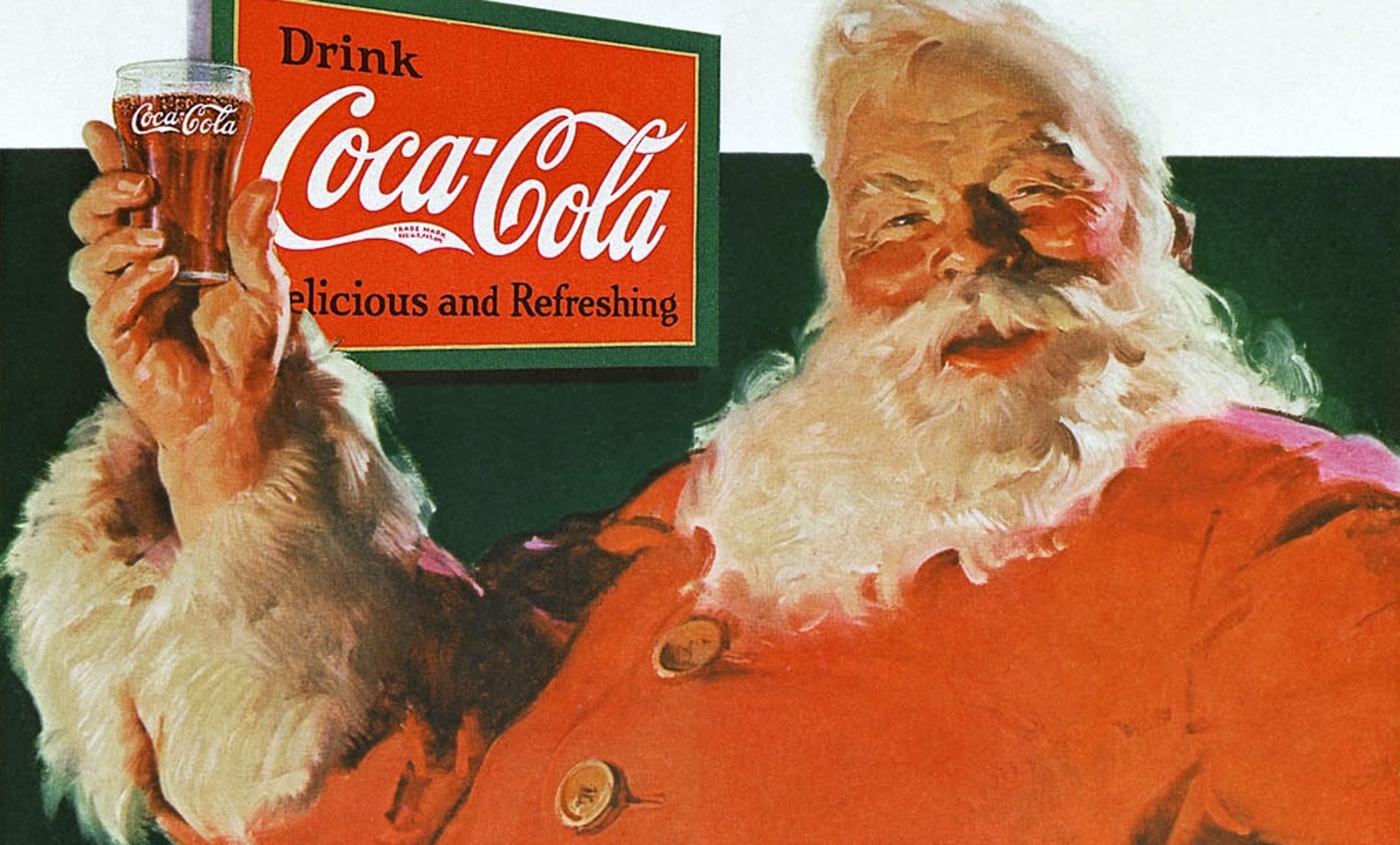
An early image of Santa used by the Coca-Cola company.
In my opinion, this is a perfect example of a dangerous move. Coke is "Always The Real Thing"... right? Consumers are rankling against AI harder than ever (whether brands and bottom lines like it or not). Blowback from the recent ad speak for themselves. Everyone’s saying the same things: “Where’s the warmth? Where’s the humanity? Where’s the hug-your-grandma feeling Coke used to own?” Which committee decided that “The Real Thing” brand should hand the most nostalgia-driven moment of the year to machine learning?
Are we all witnessing in real time that "Always" morph into "Sometimes" and the inevitable slip into "No Longer"? Coke is handing Pepsi et al an opportunity to steal what’s arguably one of Coke’s greatest assets: Christmas. Is it worth the efficiency gains on the spot?
As recently as 2025, a survey from Gartner found that 53% of U.S. consumers report low trust in AI-powered search and content summarization tools, signaling broader skepticism about AI’s outputs—especially in informational or content-heavy contexts.
Combined, these data points suggest AI can create extremely convincing visuals, but convincing doesn't guarantee trust, favorability, or brand affinity. And for many consumers, hidden or unlabeled AI feels even more like a bait-and-switch.

It may be lo-fi, but Coke's 1995 holiday spot still delivers all the feels.
Good uses (high value, low risk) ✅
High-stakes (proceed with caution) ⚠️
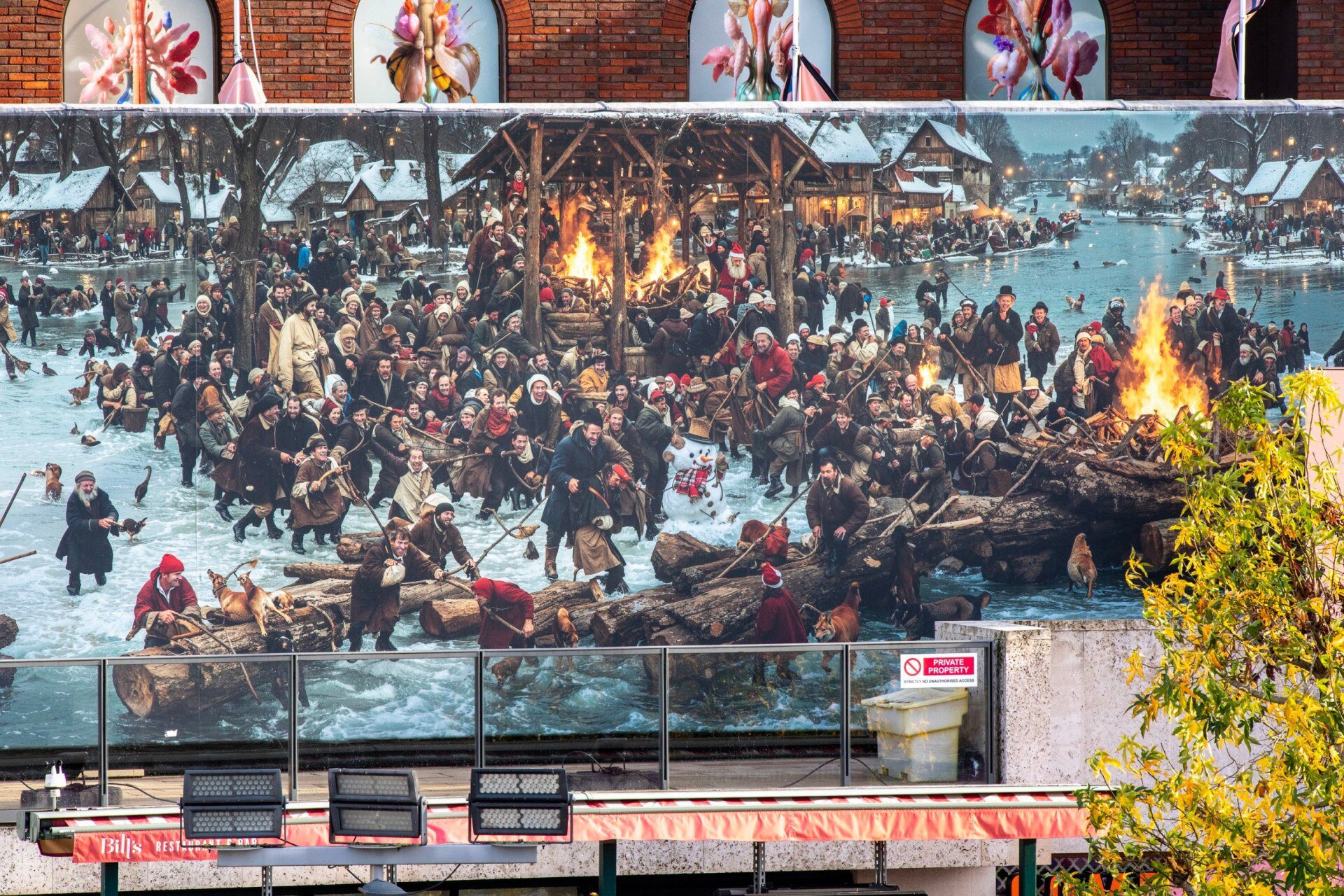
An AI-generated Christmas mural in London recently sparked backlash.
AI Is a Tool. Strategy Is the Driver.
Love it or hate it, AI part of the creative ecosystem now. But more common doesn’t necessarily mean more effective. As AI becomes ubiquitous, the bar shifts: not for novelty/perceived production value, but for judgment.
So, Pepsi, if you’re listening, here’s your freebie: Shoot a real, actual holiday ad. Simple, humble, beautifully lit with a clean Bing Crosby style track. Real people, real light, real laughter, real snow that melts on real noses. Maybe even show the real people at the end behind the scenes shooting and editing and working on the spot. No anthropomorphic seals or sloths or larger-than-life phantasmagoria.
Then, nail the coffin with “People make Pepsi.” Claim the humanity Coke has abandoned. You’re welcome, Pepsi. I accept payment in blue cans and residuals.