By Erin Eby, Executive Creative Director
Erin is the driving force of creative excellence at PlatinumBlack as Executive Creative Director. She brings nearly two decades of experience elevating the appeal and performance of some of the world’s most prestigious brands, such as Dell, Navient, Caterpillar, Pfizer, and Rolex among others. A firm believer in both analytics and persuasion science, Erin works closely with Strategy and Brand Management leadership to ensure PlatinumBlack’s creative is as effective as possible.
This article will explore the advantage of creativity in business and evolving role of creative in driving real growth for highly technical B2B companies. Erin Eby, PlatinumBlack’s Executive Creative Director, shares how brand, messaging, and design—often undervalued in technical sectors—can become strategic levers for differentiation, trust, and business impact. From orchestrating content ecosystems to navigating AI’s influence on storytelling, the conversation will highlight where creative moves the needle most and how technical companies can market with both precision and resonance.
Q: Some leaders in technical industries still view branding and creative as nice-to-haves. What’s the business case for brand in B2B?
Erin: First, let’s just acknowledge that "B2B" is kind of a misnomer. Businesses don’t make decisions—people do. And people are emotional decision-makers, even in highly technical spaces. That’s not opinion. That’s neuroscience.
There’s still this belief, especially in engineering-led or science-heavy organizations—or what we refer to as “highly technical businesses”—that if the product solves the problem, that’s enough. That you just need to explain how it works. But that’s not how decisions actually get made. The real process is: "I want it. Why do I want it?" And then people gather facts to back up their gut reaction. You must have a strong strategy, reasons to believe, and a product in place that solves a real need. But you also have to make people want it BEFORE they know why they want it.
I’ve seen this dynamic over and over, especially from my years in healthcare and pharma. I can’t tell you how many times I heard, “Doctors don’t make emotional decisions.” But they do. Everyone does. It’s human nature. And if your brand doesn’t tap into that, if it doesn’t make people feel something, it’s missing half the equation.
Q: So where does creative make the biggest bottom-line impact in these types of businesses?
Erin: It’s about creating trust and helping teams show up well. A strong brand just makes everything else easier. If your sales or BD team is leading GTM, creative becomes the support engine that greases the wheels and makes those efforts hit harder.
Think about it this way: nobody would show up to a high-stakes prospect meeting straight from the gym, sweaty and disheveled. But that’s how a lot of brands show up—outdated website, inconsistent messaging, zero polish. People assume that’s a reflection of how you do everything.
There’s a saying: “How you do one thing is how you do all things.” Creative helps shape that first impression so it builds confidence, not questions.
Q: Can you share an example of creative driving business outcomes?
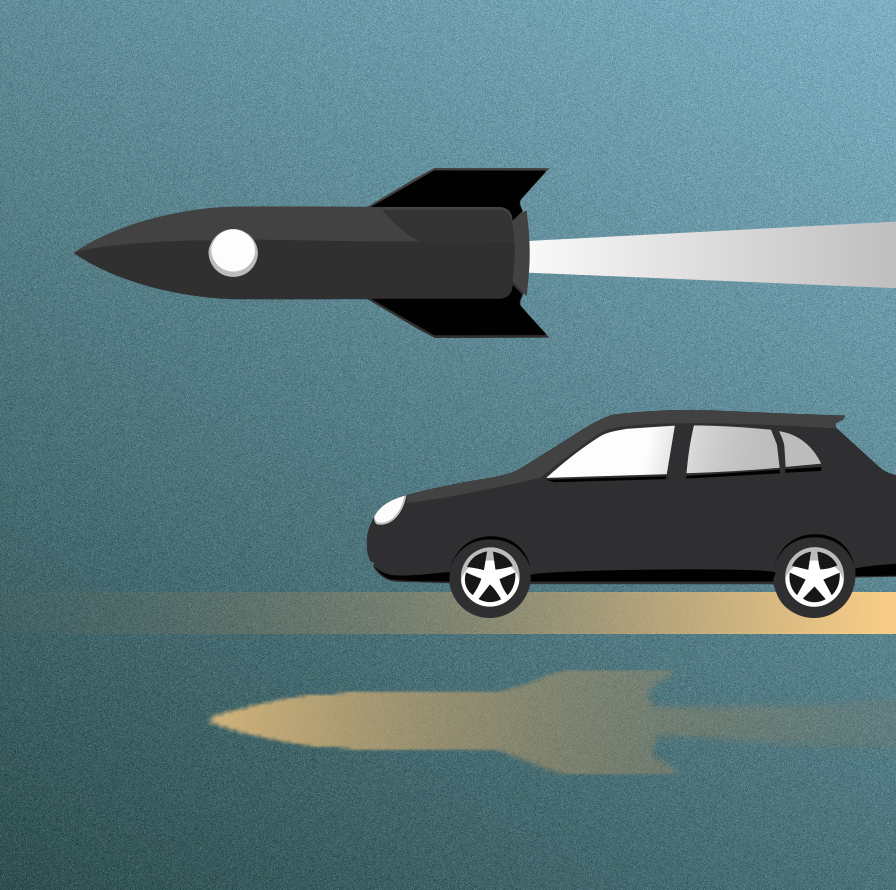
Erin: One of my favorite examples is an oilfield services client of ours. They made downhole completion tools—pretty niche stuff—and they were a much smaller operation competing with giants like SLB and Halliburton. Early on, the founder would literally drive around with tools in the trunk of his car to show buyers.
They had a great product, but they were seen as cheap, and in oil and gas, cheap often equals risk. So we rebuilt the brand. Everything from the identity to the messaging to the sales enablement was designed to position them as "smart," not "discount."
The transformation was dramatic. They went from looking like a scrappy supplier to feeling like a high-tech specialist. That change helped them build credibility and trust—and in 2018, they were acquired for nearly half a billion dollars. That investment in brand absolutely contributed to their growth and valuation.
Q: When the product is complex or technical, how do you make it resonate through creative?
Erin: First, you meet people where they are. We make it a priority to become just as fluent in the technical material as our clients are—because you can’t simplify or humanize what you don’t understand.
Then we zoom in on the actual people making decisions. Not just the business case for the product, but the personal motivators. What’s keeping them up at night? How does this make their life easier? How can we help them look good?
Creative isn’t just about telling the story of the product. It’s about telling the story of what it means to the buyer.
Q: How do you balance technical accuracy with emotional resonance?
Erin: Those two things aren’t mutually exclusive. Just because something is technically accurate doesn’t mean it can’t be emotionally powerful. It’s not always what you say—it’s how you say it.
That said, we’re careful not to overwhelm people. Not everyone wants to wade through ultra-nerdy specs or RTBs. If your audience is super technical, great—give them what they want. But if not, you risk “selling past the sale.” People tune out when the message becomes too dense.
Q: What have you learned about brand in these complex B2B categories?
Erin: This may be a controversial statement, but I believe the quality of the creative is only as strong as the quality of the strategy. You can’t just make something look good. You need to understand the audience deeply—what they care about, what motivates them. Otherwise, you risk your brand efforts being nothing more than new wallpaper.
And in B2B, you’re rarely selling to just one person. There are multiple stakeholders, each with different needs and anxieties. You can’t lump them all together. Brand becomes the thread that connects how you speak to each of them, unifying the story across the buying journey.
Q: One piece of advice for CMOs or growth leaders in technical sectors?
Erin: Don’t play it safe. I get it—there are a lot of stakeholders, and B2B brands tend to default to what’s safe and inoffensive. But vanilla doesn’t get remembered.
There’s so much brand territory in technical spaces that’s still up for grabs. If you want to win hearts and minds—and market share—you have to be bold enough to be different.
Q: How is AI changing the role of creative?
Erin: It’s democratizing it. AI has leveled the playing field so companies with smaller budgets can look just as polished as big brands. That’s exciting—and a little terrifying.
It also means there’s a tidal wave of content. More stuff, made faster, on autopilot. So if you can’t win on quantity or even production value, you have to win by being smart.
That’s where deep customer insight comes in. The companies that win will be the ones who actually understand their audience, and use that understanding to create content that hits home.
You have to know who you're talking to and say something that matters. Period. You can’t out-volume the market anymore. You have to out-relevance it.